General
DASH, an acronym for Dynamic Assessment of Sensorimotor Health, is a VR application created to administer, measure, and analyze various interactive tasks to test the user’s balance, coordination, reaction time, and more.
While the initial scope of its design was to evaluate concussion symptoms in athletes, DASH has steadily grown into a multipurpose tool for collecting and compiling clinical research data for various forms of injury or impairment.
Points of Interest
- Configurable Tasks and Protocols — Each task within DASH can be thought of as an independent sub-application: it takes a set of input parameters, runs until some exit condition is reached, then terminates and passes control back to the main application. Furthermore, tasks can be grouped into sequences called protocols which have their own set of parameters to give dynamic control over the final task order. Protocols as well as task parameter metadata can be transcribed to JSON to support inter-application functionality and creating user-defined protocols.
- Real-time Data Output — While the user is performing a task, time series data containing their head position/orientation, hand position/orientation, and other values pertinent to the task are both recorded locally to the device’s hard drive and streamed over the local network using the Lab Streaming Layer API. Likewise, metrics aggregating the collected data are automatically computed and output in tandem.
- Web App Integration — Different proctors/administrators may wish to focus on different areas of health for their patients. As such, protocols can be assigned to specific sets of users using a provided web app. When a user logs in to DASH, the protocols available to them are automatically updated from the web app’s database, and likewise, all task data is uploaded to the web app to provide admins with an immediate and user-friendly way to view and assess the results.
- Replay Reconstruction — When there is a need to examine more than just numerical values, a 3D visual reconstruction of the user’s movements and actions can be created and viewed using a provided companion app.
Responsibilities
From April 2024 to January 2026, I worked at Emory University’s Sports Performance and Research Center under the direction of Dr. Christopher Riehm to develop DASH. As the primary, and often singular Unity developer on the team, my main responsibility was designing, managing, and implementing the codebase at all levels of granularity to satisfy the features and specifications established by Dr. Riehm.
Frequently, my experience as a game developer also allowed me to fulfill a generalist role: creating/designing GUI, 3D environments, animations, sound effects and other assets as necessary for the project.
Gallery
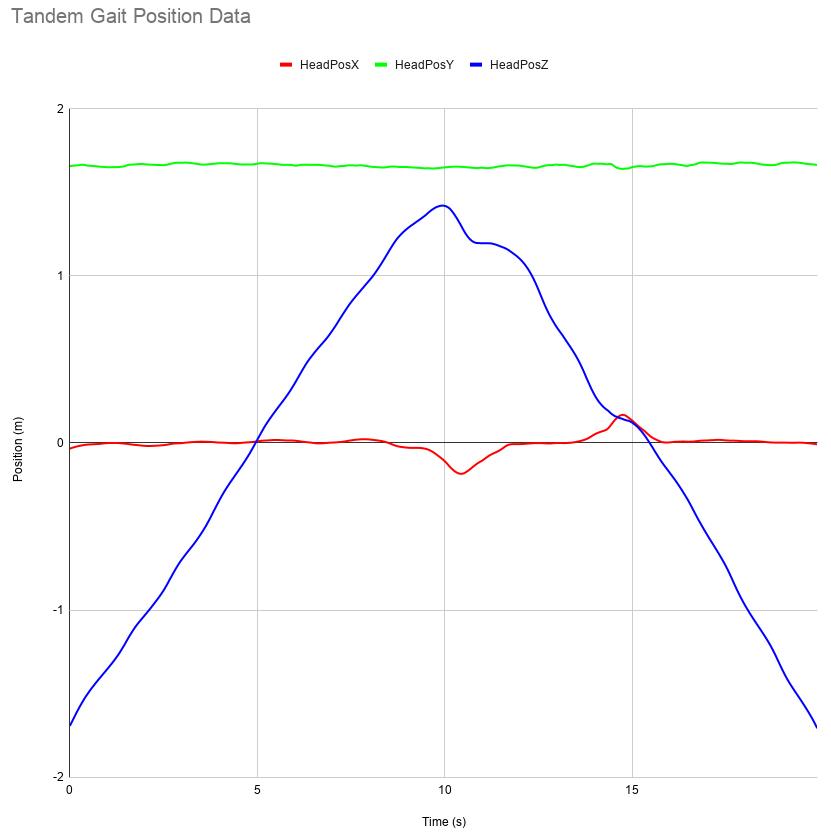
Head position data output during Tandem Gait: a task where the user must walk in a straight line, then turn around and come back.
Third-person footage from an early version of DASH.

Viewing a replay of the Trail Making task in the companion app. Tracers for the user’s left hand (green), right hand (red), head (blue), and eye rotation (orange) can be toggled on/off for visual analysis.
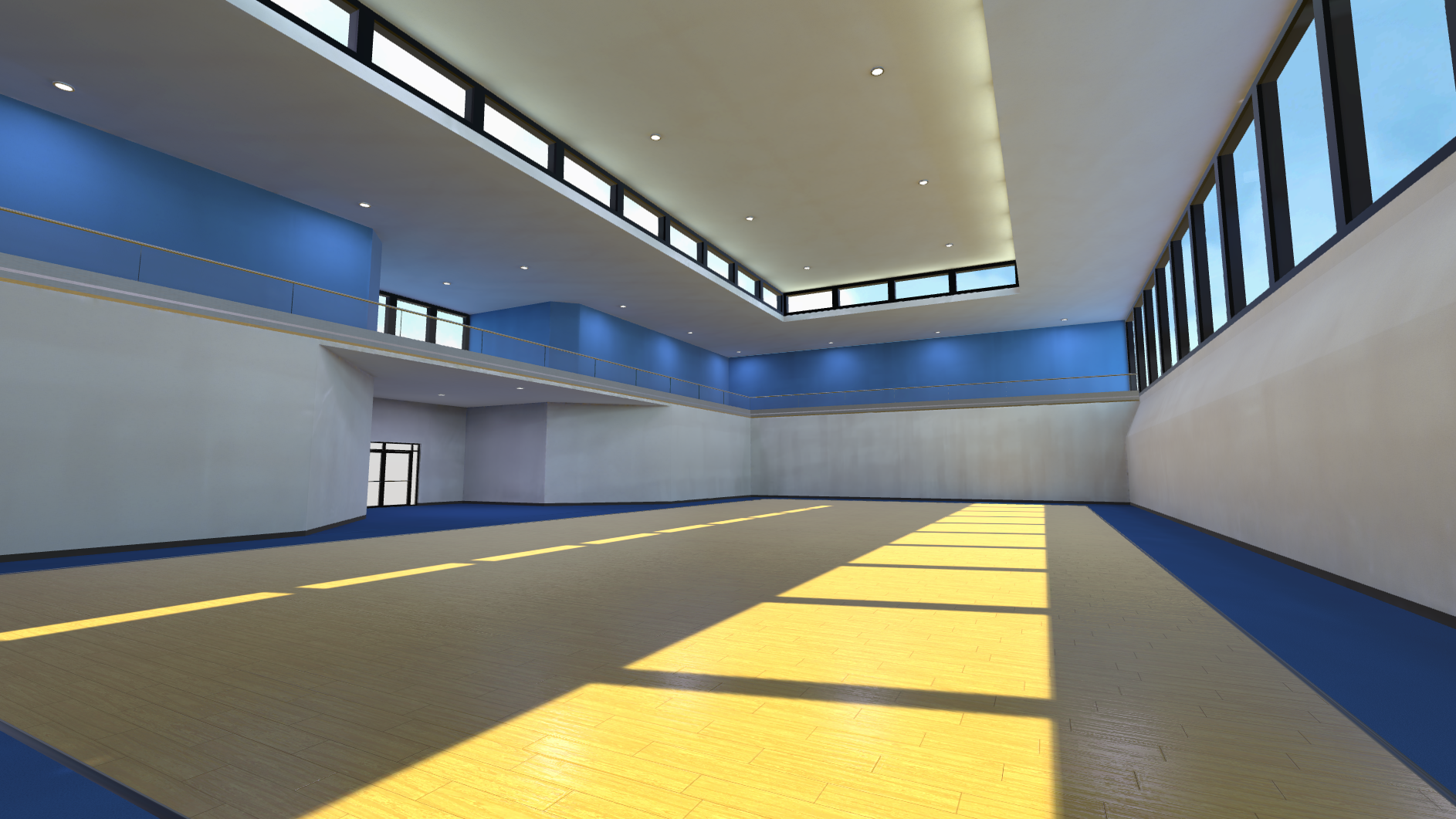
Gymnasium environment created for DASH.